
Is AI image generation with nano banana dangerous? How safe is it? A detailed explanation of the risks and precautions you should know.
nano banana is a powerful AI, but it comes with copyright and data usage risks. This article outlines key safety points and introduces “copainter,” a secure illustration AI that does not use your data for training.
Google’s latest image-generation AI, “nano banana,” is drawing attention for its high consistency and natural editing capabilities.
However, many people also have safety concerns, such as:
- “Will my data be used for training?”
- “Could I run into trouble if I use it commercially?”
In this article, we’ll clearly explain the risks and key precautions you should know when using nano banana. We’ll also introduce “copainter,” a tool that lets you use nano banana in a safer environment—so you can create illustrations with greater peace of mind.
Try copainter, an AI illustration creation support tool (copainter/コペインター)
What is nano banana?
nano banana is a nickname for the image generation and editing feature powered by Google’s AI model, “Gemini 2.5 Flash Image.”
It can read illustrations and photos and respond to natural-language instructions—such as changing backgrounds, adjusting a character’s pose, or creating different facial expression variations.
On social media, it became a hot topic for transformations like “turning 2D illustrations into 3D figure-style images,” attracting strong interest from creators. Still, while it’s very convenient, you need to be careful about data handling and copyright depending on how you use it. Let’s start by looking at what makes nano banana unique.
For more details on the basics of nano banana, see the following article:
nano banana: A complete guide to features, pricing, and important precautions
How nano banana differs from other generative AIs
One of nano banana’s biggest strengths is its high level of consistency.
Even when generating the same character in different poses or backgrounds, the face and overall vibe are less likely to change—resulting in a natural output that still feels like the same person. This makes it especially suitable for manga, anime, and VTuber models, where you often need the same character across multiple scenes.
It’s also good at building compositions by combining multiple images, expanding what’s possible in illustration workflows. Many people note that it can generate stable, natural results—as if the AI understands the character settings.
Safety risks discussed around “figure-style generation”
nano banana gained popularity for converting illustrations and photos into 3D figure-like images. But because so many people started generating and sharing images casually, discussions about safety and legal risks also emerged.
For example, some users posted “figure-style” images generated from photos of real celebrities. This raised concerns about potential copyright, portrait rights, and publicity rights violations.
Using real people’s photos purely for personal enjoyment is generally not an issue, but legal risks can arise if you use the results for promotion, sales, or other commercial activities.
It’s important to check the terms of use and make sure you respect rights while using the tool safely.
Key things to be careful about when generating with nano banana
nano banana’s high-quality output is appealing, but to use it safely, there are several points you should watch—especially around data handling and intellectual property.
Here are some representative risks to be aware of:
- Uploaded data may be used for model training in some cases
- Image generation is not perfect
- Outputs may contain data you can’t use without permission (e.g., company logos)
- Risk of violating copyright, portrait rights, or publicity rights
- Risk of defamation when posting to social media
Let’s go through each of these in more detail.
Uploaded data may be used for AI training
If you use Gemini directly, depending on your settings, the images you upload and the content you generate may be used to improve the AI model.
If you’re handling unreleased artwork, client work, or personal portraits, this can increase the risk of information leakage—so you should be cautious. When working with important data, you may want to confirm the data-handling policy and choose a service that does not use your content for training.
nano banana cannot generate images perfectly every time
nano banana is more accurate than many other generative AIs, but it still won’t always produce exactly what you intended.
For illustration work in particular, it may struggle with difficult poses or complex compositions, and getting a pose to match a prompt exactly can be challenging.
Outputs may include logos or trademark-like elements
In some cases, generated images may accidentally include elements that resemble existing brand logos or products. Even if it’s unintentional, this can create trademark issues—so you should review outputs carefully before publishing or using them commercially.
A quick check like “Does this remind people of a specific brand?” or “Does it look too similar to a known design?” can help you avoid unexpected trouble.
Consider risks related to copyright, portrait rights, and publicity rights
Images generated from someone else’s illustrations or celebrity photos can potentially violate copyright, portrait rights, or publicity rights.
This risk becomes higher when the generation preserves recognizable features—such as figure-style conversions. Even for personal use, caution is recommended; for public posting or commercial use, obtaining permission from the rights holder is the standard approach.
Consider defamation risks when posting to social media
When posting nano banana outputs online, using them in a way that harms the image of the person used as a reference—or making insulting edits—may lead to defamation issues.
Even if you didn’t intend it, AI-generated results can still be interpreted by viewers as connected to a real person. Before posting, consider whether the content could mislead others or hurt someone.
Can nano banana be used commercially?
Because nano banana can generate highly polished images, many people want to use it for work or projects. The conclusion is: commercial use may be possible depending on how and where you access it.
However, the conditions can vary based on the service you use, and using it without fully understanding data policies and terms can lead to trouble. So it’s important to understand the basics first.
Conditions under which commercial use is allowed
Commercial use is limited to using nano banana via “Google Workspace with Gemini” or “Vertex AI.”
A key point is that consumer or free versions may place restrictions on commercial use or rights. Make sure you use the correct environment and follow the official guidelines.
Reference: “Have more fun and freedom with image generation using Gemini’s Nano Banana!” (Official Gemini note)
Precautions for commercial use
Even if you’re using a commercial-eligible environment, you still need to check for copyright, portrait rights, and trademarks. Generating images inspired by someone else’s work, or creating characters that resemble celebrities, can lead to unexpected problems.
Also, Google’s terms can be updated over time, so checking the latest rules is important. For client work or assets intended for sale, you should ensure the output is truly original and not infringing on anyone’s rights.
If you want to create illustrations safely: “copainter”
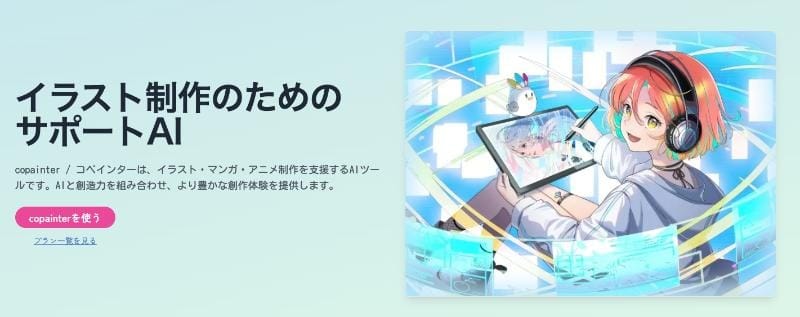
nano banana is extremely powerful, but many users still worry about data handling and rights—especially concerns like “Will my uploaded work be used for AI training?” or the complexity of checking terms for commercial use.
That’s where “copainter” comes in: an illustration creation service that allows you to use nano banana in a safer environment. It’s designed with careful attention to security so creators can work with confidence.
copainter’s “AI Assistant” feature
copainter includes an AI Assistant feature powered by nano banana, optimized specifically for creators. It supports:
- Creating facial expression variations
- Changing poses
- Replacing backgrounds
- Maintaining image consistency
In addition, uploaded images and generated data are not used for AI training, making it safer for original characters and confidential client work. It also includes illustration-focused features such as aspect ratio changes and upscaling.
It’s a great option for creators who want both safety and creative freedom.
The AI Assistant feature is available even on copainter’s free plan. If you’re interested, try getting started from the link below:
Try copainter, an AI illustration creation support tool (copainter/コペインター)
Benefits of using copainter’s AI Assistant for illustration creation
copainter provides a safe and easy-to-use environment while maximizing nano banana’s strengths. It’s built around the practical needs of creators—“This is exactly what I wanted”—with many useful features.
Here are some highlights:
Change aspect ratios freely
You can adjust the aspect ratio to match your needs—vertical for social media, horizontal for web banners, square for icons, and more.
Because the AI naturally corrects the composition, it doesn’t simply stretch the image. It helps preserve the balance of the character and background, making it useful when you need platform-optimized sizes.
Uploaded and generated data is not used for model training
copainter does not use your uploaded images or generated illustrations for AI training. This is clearly stated, so you can use it with confidence—even for original characters or unreleased client projects.
From both privacy and copyright-management perspectives, it’s a safer environment for taking advantage of AI.
Rich illustration-focused features
copainter includes many tools beyond AI assistance—such as line-art support, color correction, style conversion, upscaling, and background generation. It supports multiple stages of production, making it suitable for beginners and professionals alike.
By combining features, you can produce high-quality work in less time.
Commercial use supported, with business plans available
Works generated or edited in copainter can be used commercially. It also offers business plans for teams and enterprise projects, and it has been adopted by many companies in anime and game production.
Because both rights and safety are addressed, it’s a reliable tool for professional use.
Evolve your illustration workflow with copainter
nano banana is a powerful AI that enables consistent character generation and natural image editing. However, you still need to consider issues such as possible training use of your data and legal risks around copyrights and portrait rights. Safe usage requires understanding the terms and respecting rights.
If you want to move forward with AI-assisted illustration creation with confidence, copainter is a strong option—offering an environment where uploaded data is not used for training and commercial use is supported. Use high-performance AI safely, and expand your creative freedom.
Try copainter, an AI illustration creation support tool (copainter/コペインター)
![[Free Download] Chibi Character Battle Pose Collection — Free for Copainter Users, Including Commercial Use](/content/images/size/w720/2026/03/header_pose-collection_battle-of-deformation-character-1.png)
![[Free Download] Female Battle Pose Collection — Free for Copainter Users, Including Commercial Use](/content/images/size/w720/2026/03/header_pose-collection_battle-of-woman-1.png)
![[Free Download] Male Battle Pose Collection — Free for Copainter Users, Including Commercial Use](/content/images/size/w720/2026/03/header_pose-collection_battle-of-man-1.png)