
[Free Download] Woman Playing the Piano Pose Collection — copainter users may use it commercially and free of charge
A free pose collection of female characters playing the piano for illustrations, manga, anime, games, and Webtoons. Commercial use, tracing, and editing are allowed for copainter users.
![[Free Download] Woman Playing the Piano Pose Collection — copainter users may use it commercially and free of charge](/content/images/size/w1200/2026/01/copainter_posecollection_220.png)
We are distributing a free base-body pose set of female NPC-style characters playing the piano, designed for use in creating illustrations, manga, anime, games, and webtoons (Webtoon). Please use it when generating illustrations with pose control in copainter (CoPainter) or when sketching character illustrations. Tracing and edits/retouching are also OK.
The license for images downloadable from this page is stated further down in the main text.
■ File Overview
- File format: PNG (white background)
- Resolution: 1024 × 1024 px (square)
- Download: Please download and save the attached images in the body text as-is and use them.
■ Woman Playing the Piano Pose Collection (Download Available)
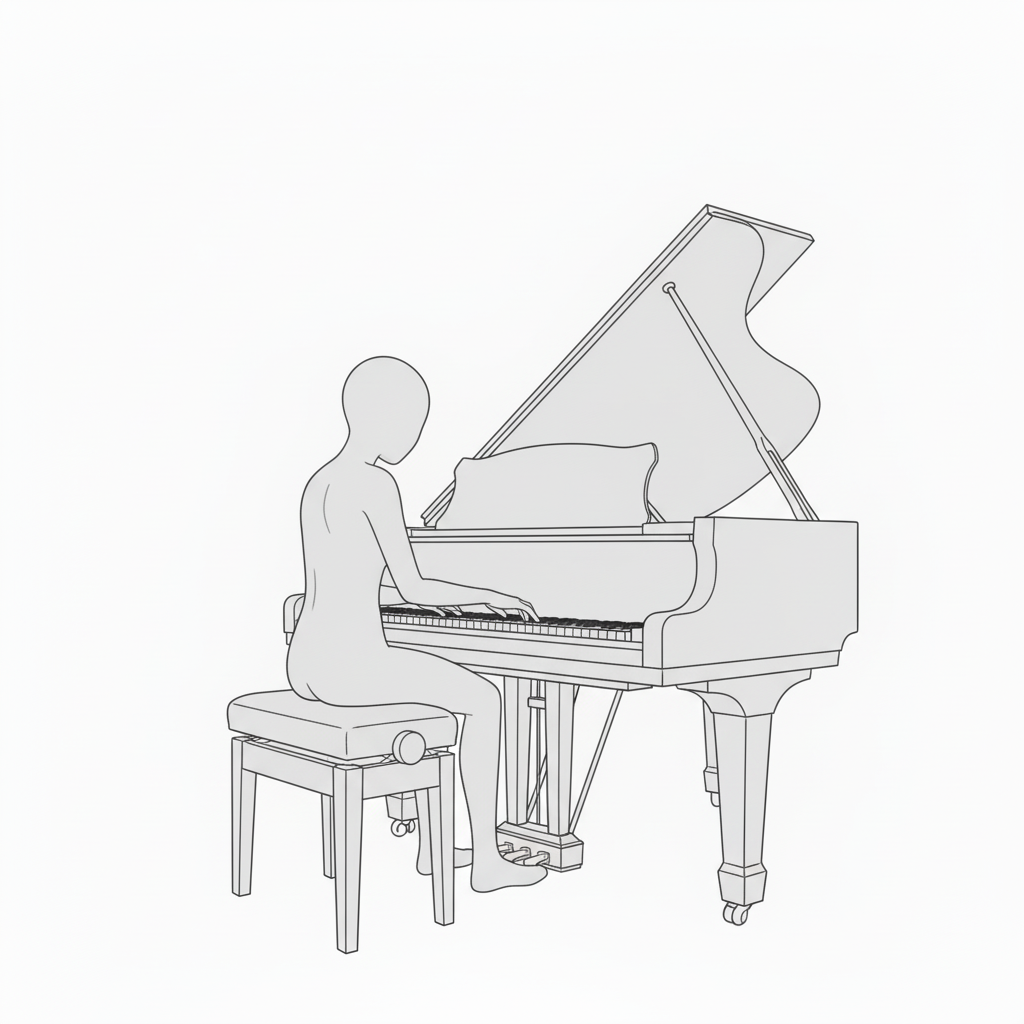
Grand piano performance (side composition) | Ideal for classic performance scenes
A back view of a calm posture while playing the piano. Perfect for depicting a music room or recital setting.
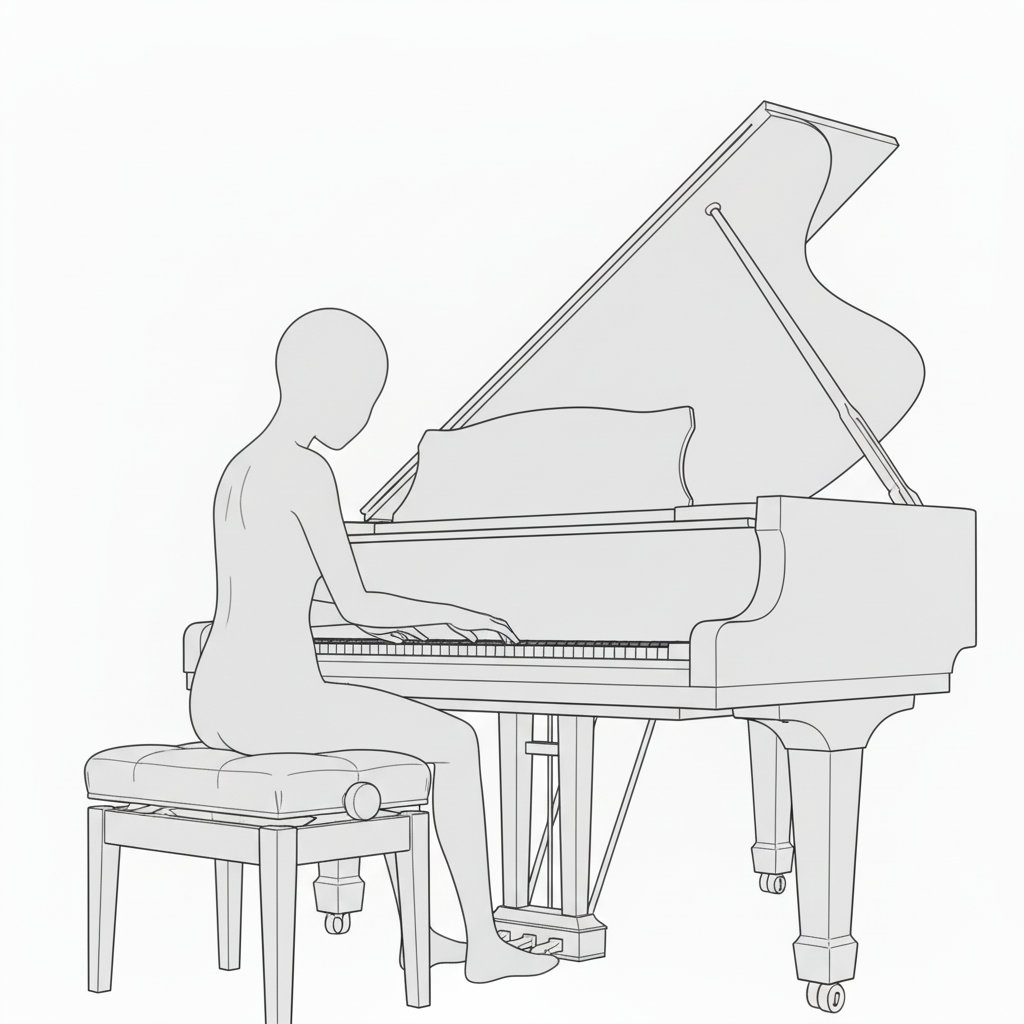
Piano performance side view | Recreating realistic keystrokes
A composition that clearly shows hand and foot positions. Recommended as reference for realistic playing motion.
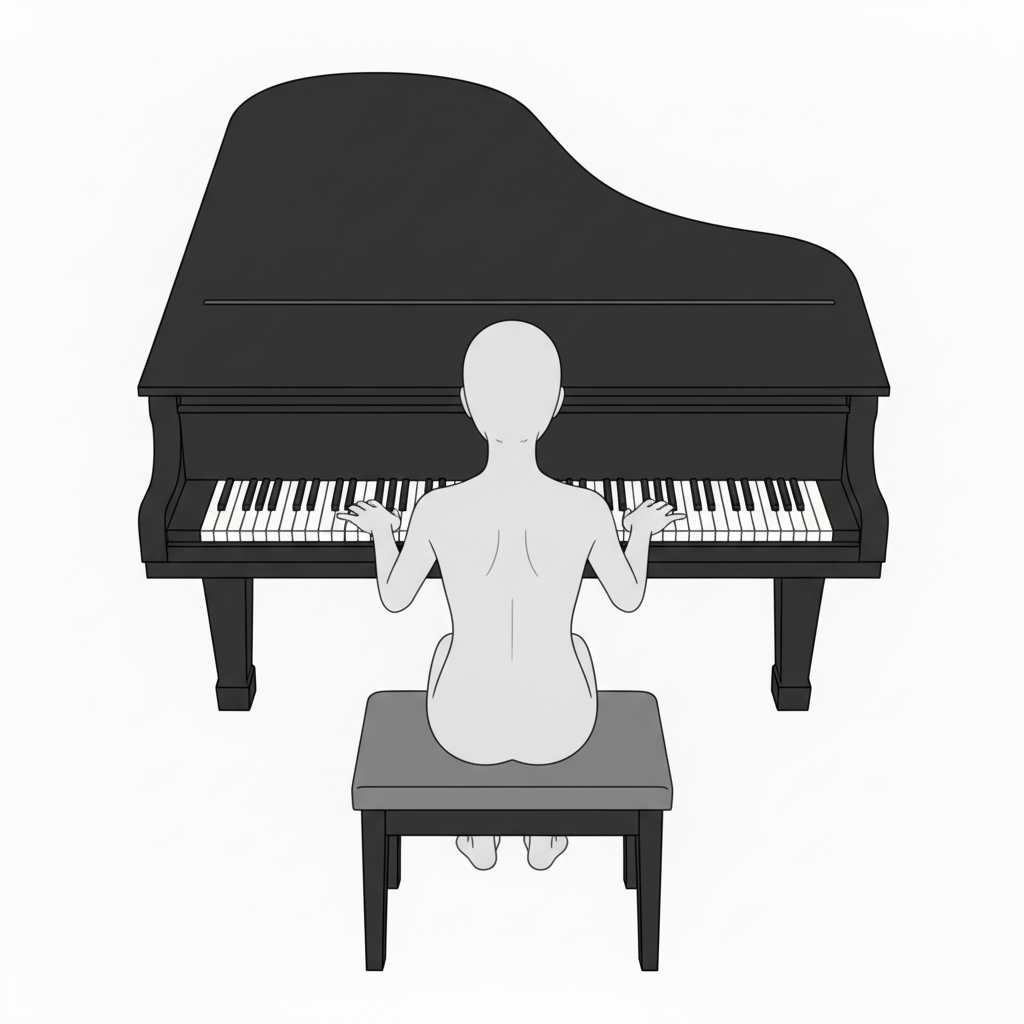
Top-down piano performance composition | Clearly showing left- and right-hand fingering
An overhead composition that looks across the entire keyboard. Helpful for understanding hand placement and posture while playing.
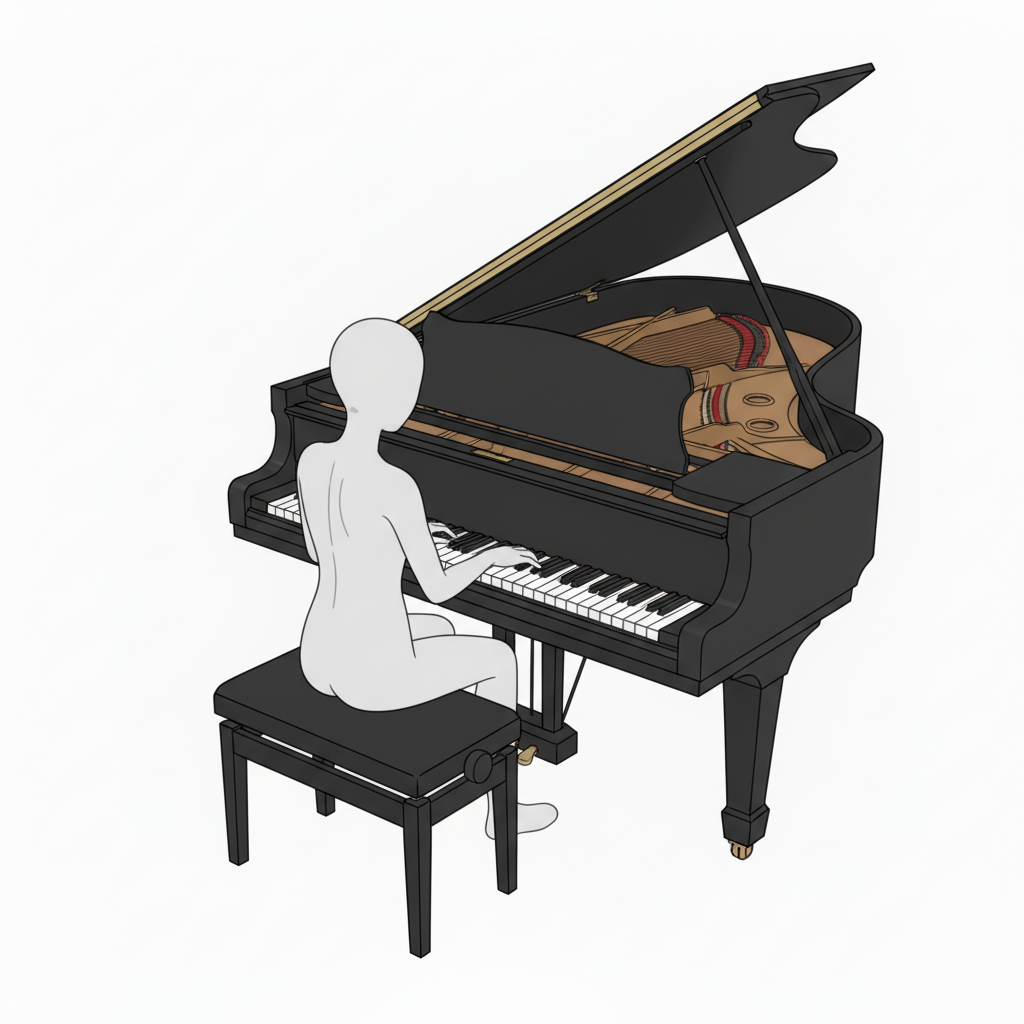
Diagonal piano performance angle | Creating an immersive performance scene
A realistic viewpoint that even shows the grand piano’s internal structure. Helps express the depth of the music.
Front-view pianist posture | A basic composition for classical performance
A well-balanced seated posture while playing. Ideal as foundational reference for playing form.
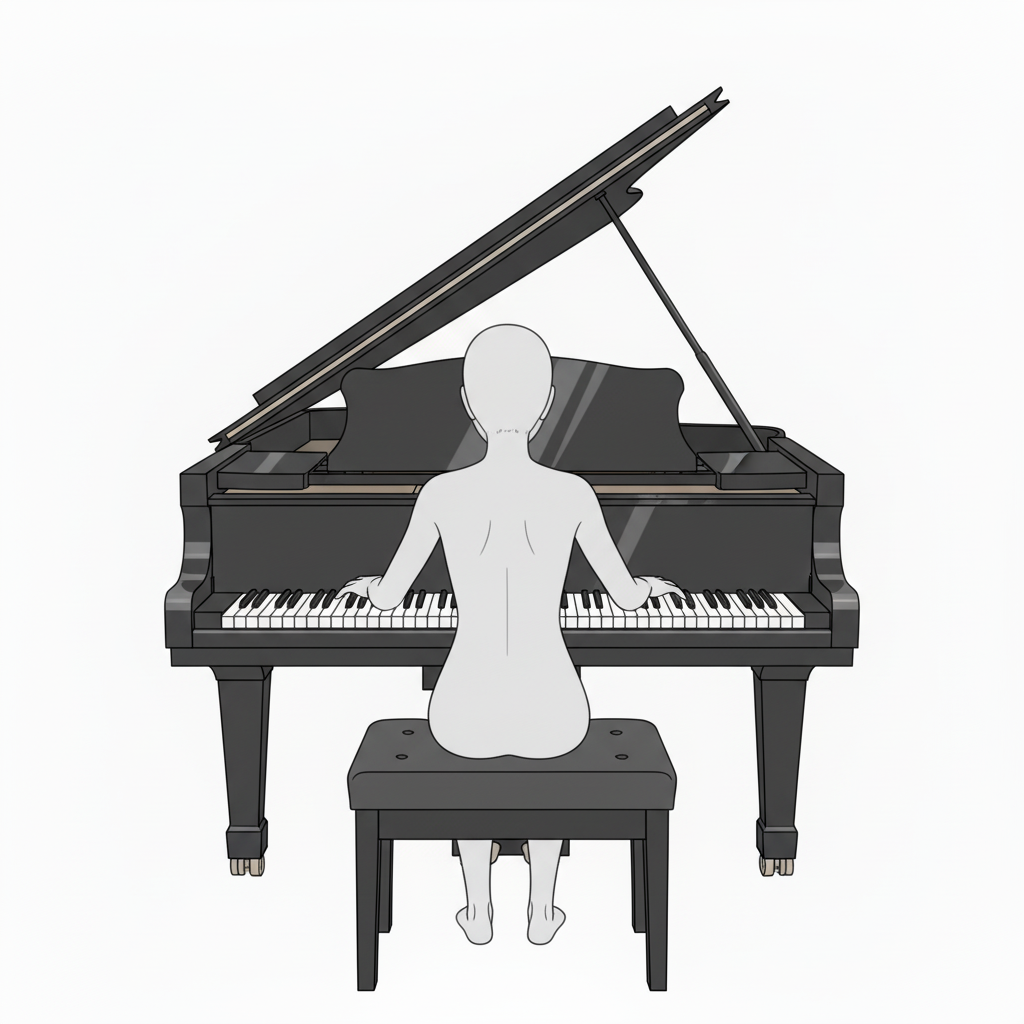
Front-view digital piano performance | For depicting modern instrument scenes
A composition suitable for expressing contemporary stage performance. Simple design makes it easy to adapt.
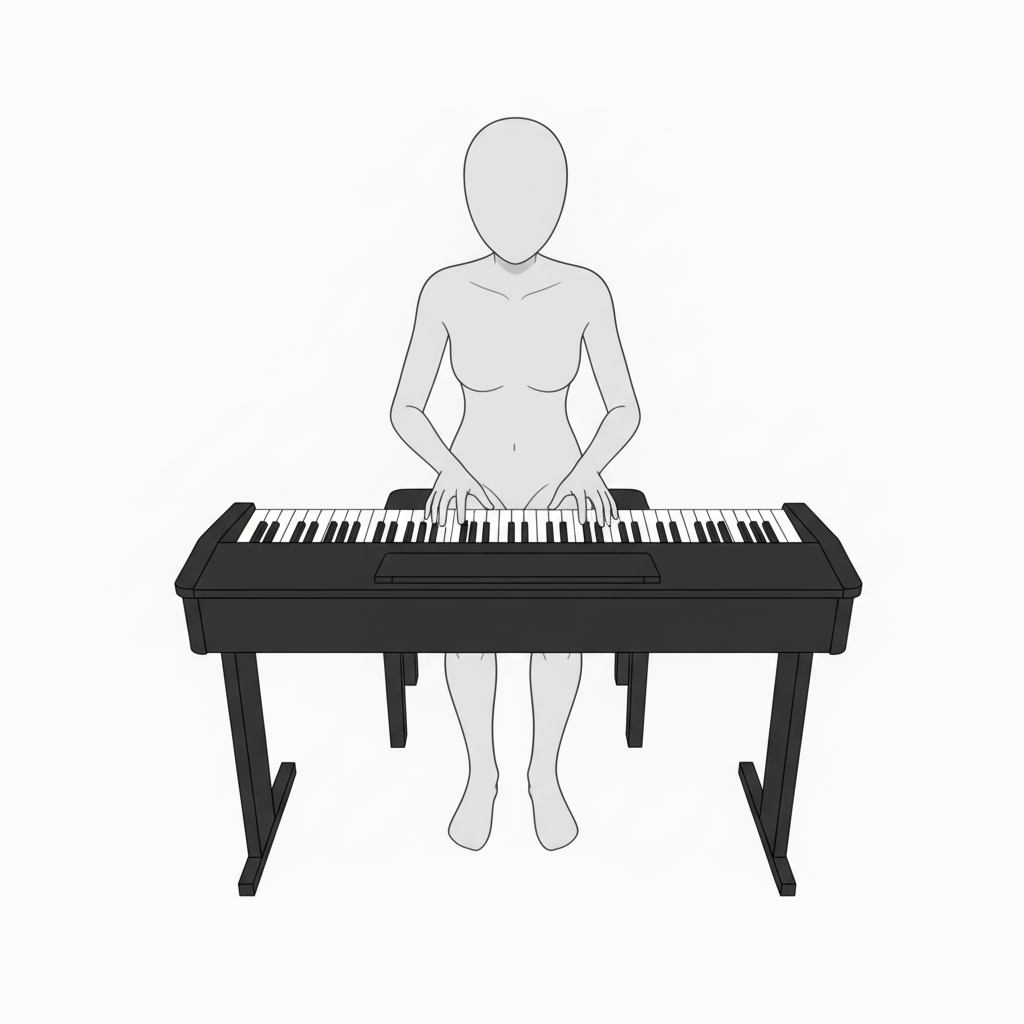
Side-angle digital piano performance | Reference for at-home playing scenes
A side composition facing the keyboard in a natural posture. Perfect for depicting everyday music moments.
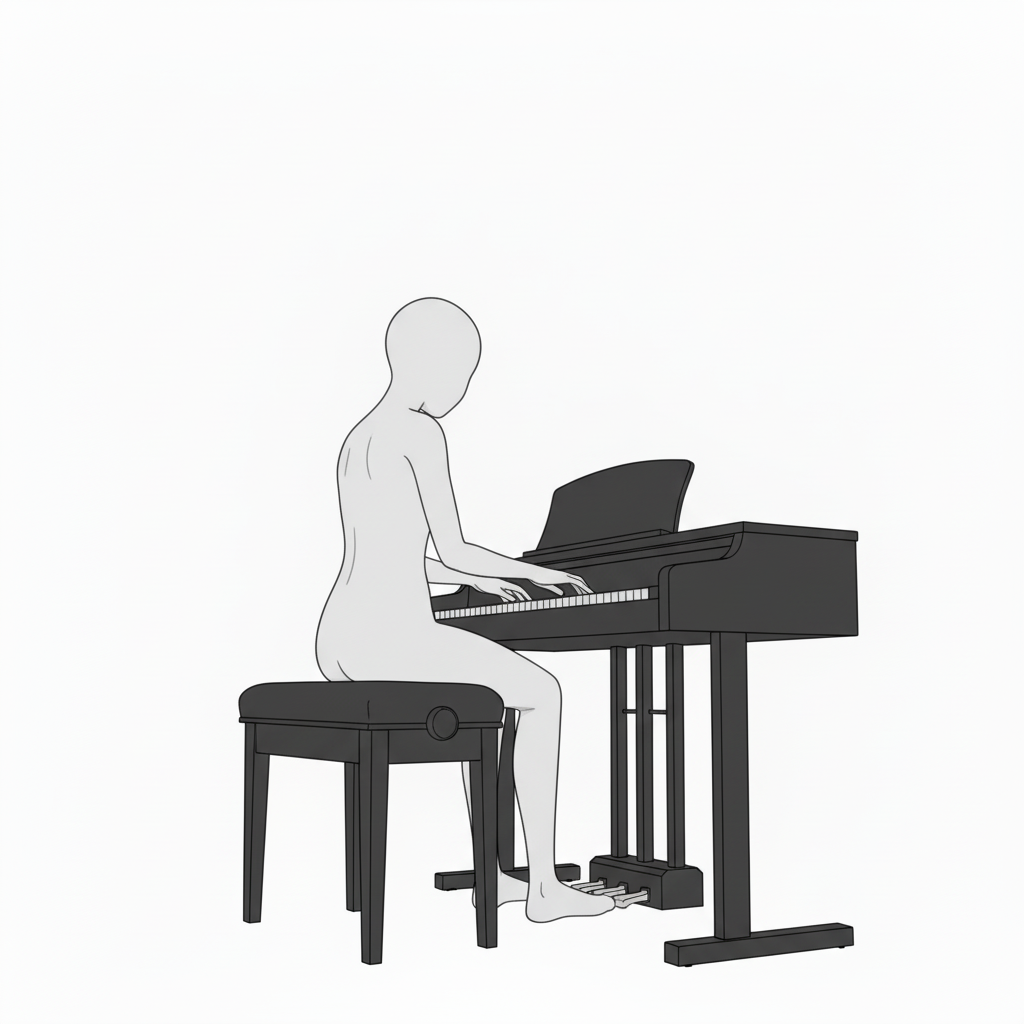
Close-up of hands while playing | Creating performance tension
A composition that suggests fingertip movement and focused expression. Ideal for live scenes and emotional moments.
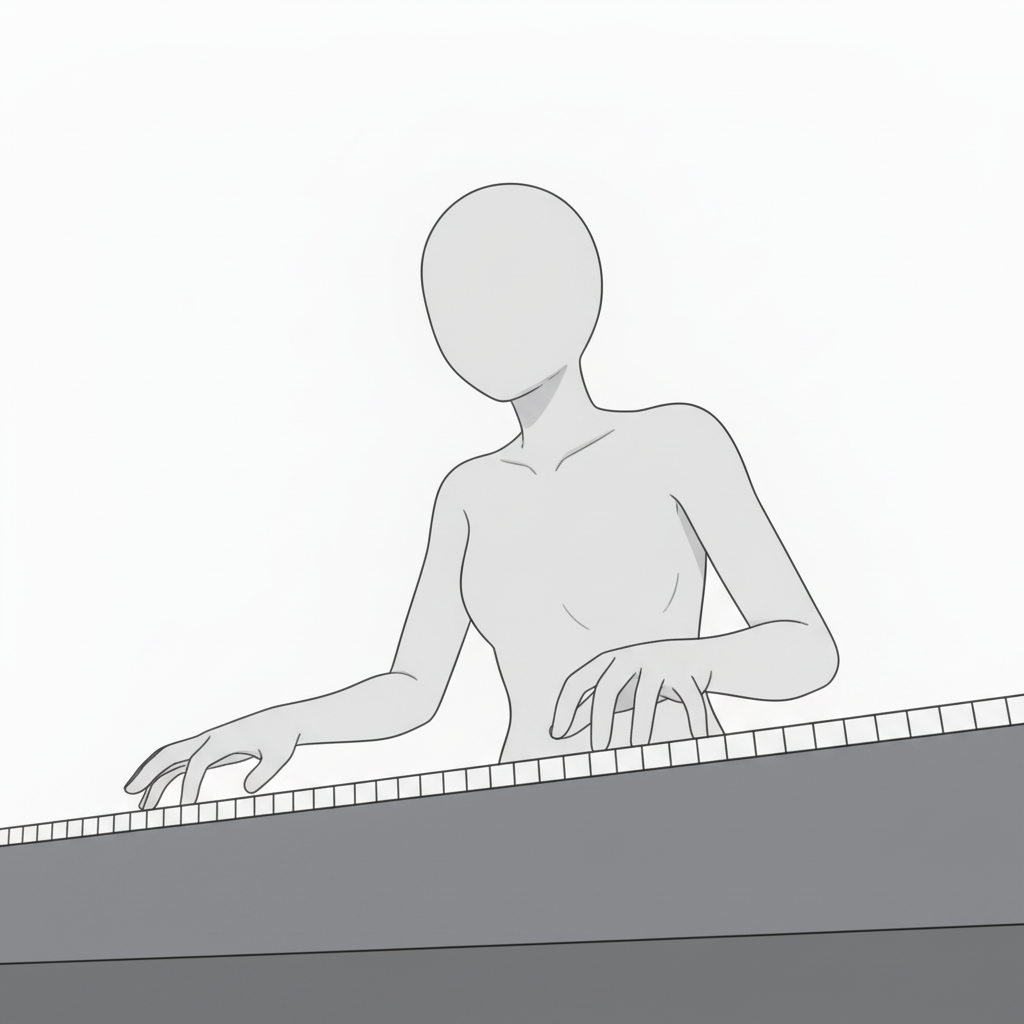
Low-angle stage performance | A keyboard composition that adds a live feel
A composition looking up at a digital piano from below. Can also be used with lighting and audience staging.
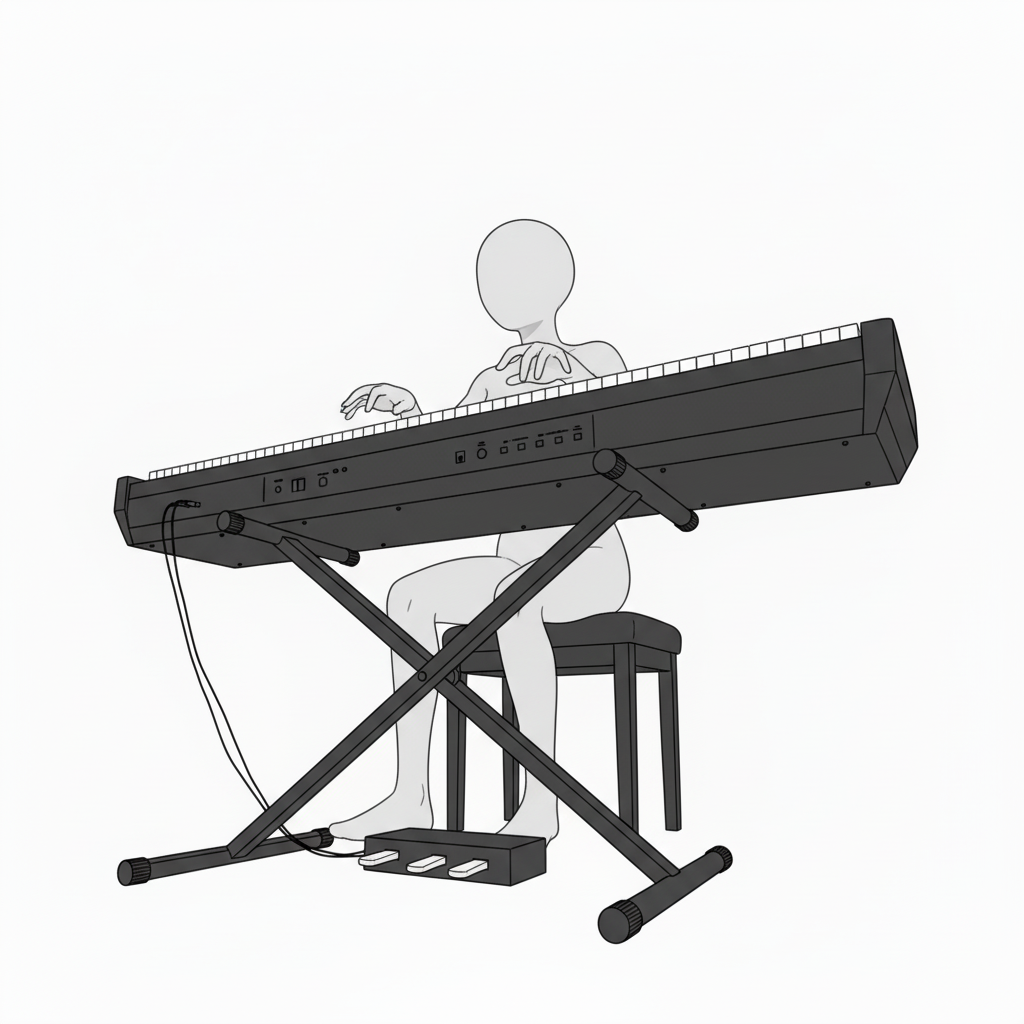
Top-down digital piano performance | A composition showing focused posture
A straight-overhead view showing the relationship between the keyboard and body. Ideal for practice scenes or solo performance moments.
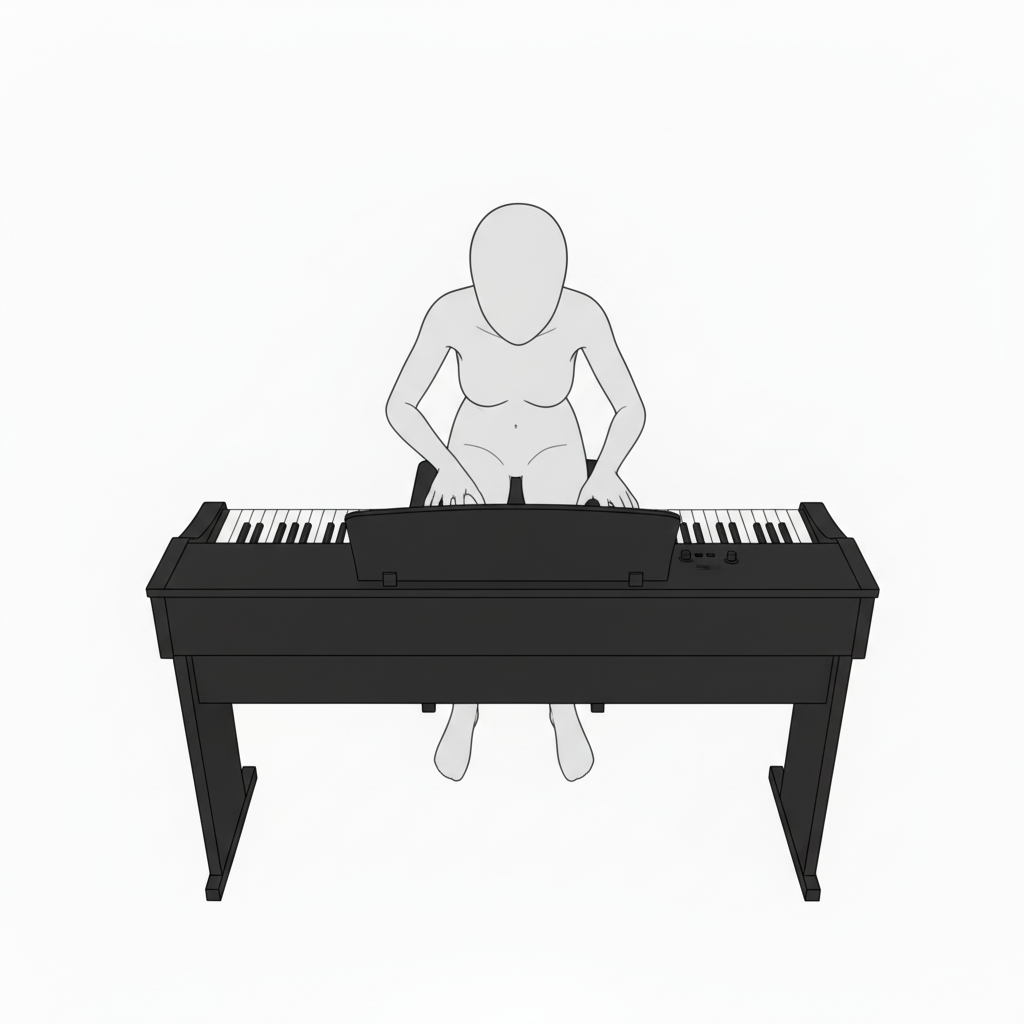
Standing keyboardist on stage | A dynamic, live-feel composition
A pose playing the keyboard while standing. Ideal reference for stage performances or band scenes.
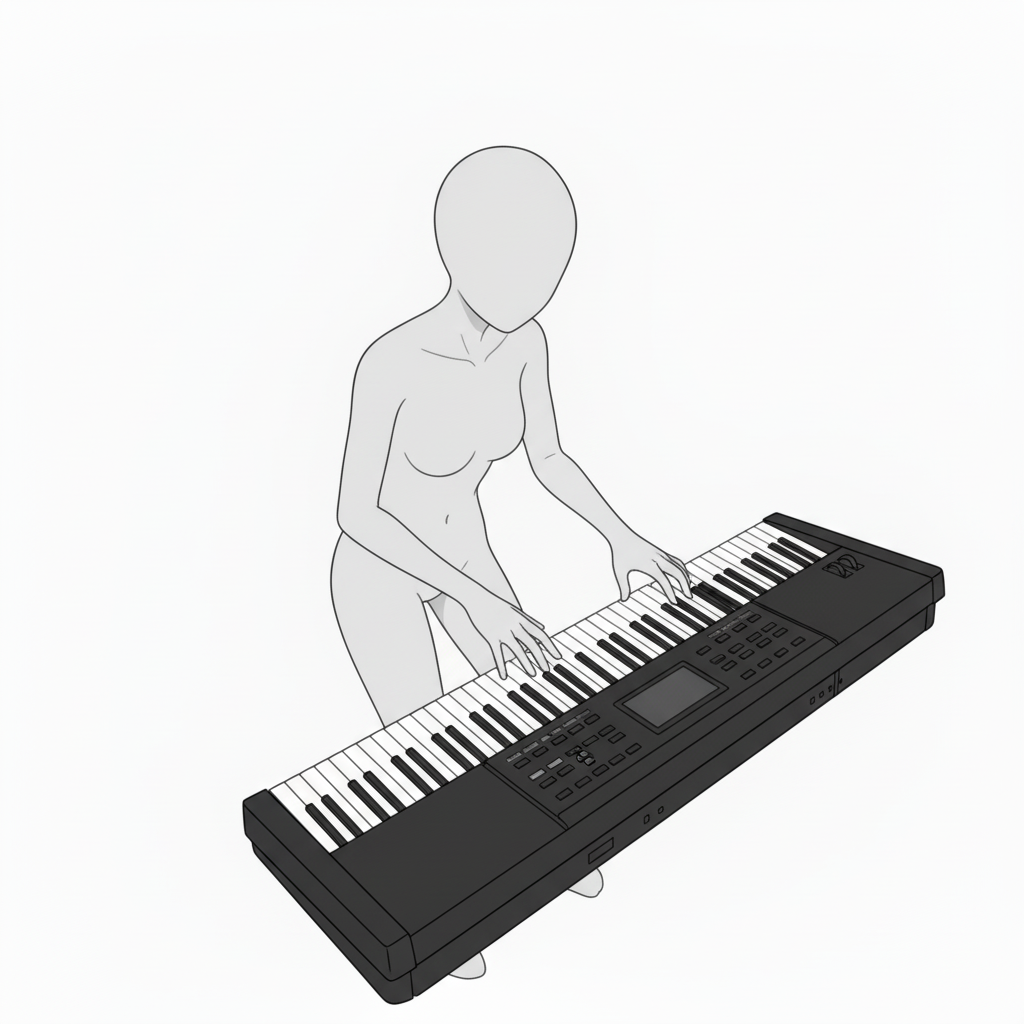
Leaning keyboard performance pose | For expressing rhythm and groove
A posture leaning slightly toward the keys. Recommended when drawing an energetic, “in-the-groove” performance.
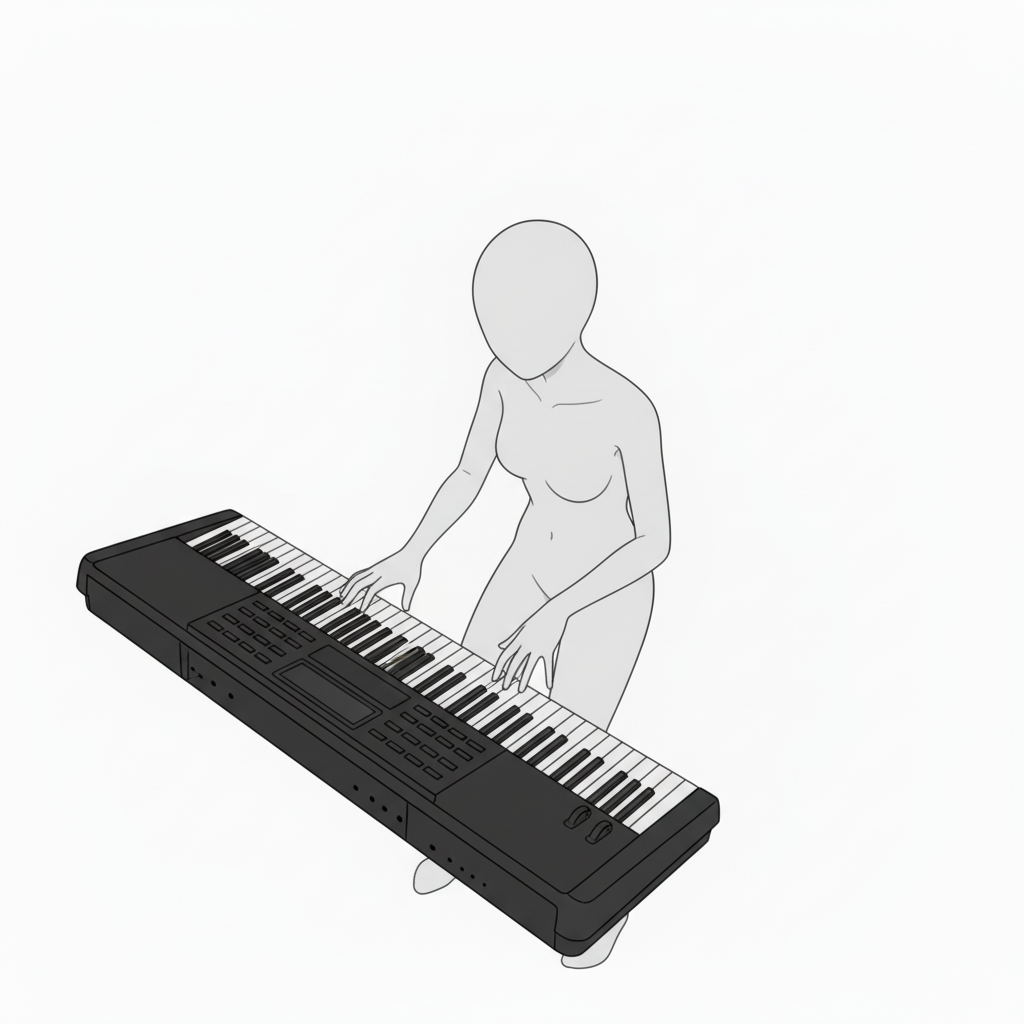
Focused grand piano performance pose | Perfect for emotional scenes
A side composition of being absorbed in playing. Useful for scenes that express quiet passion.
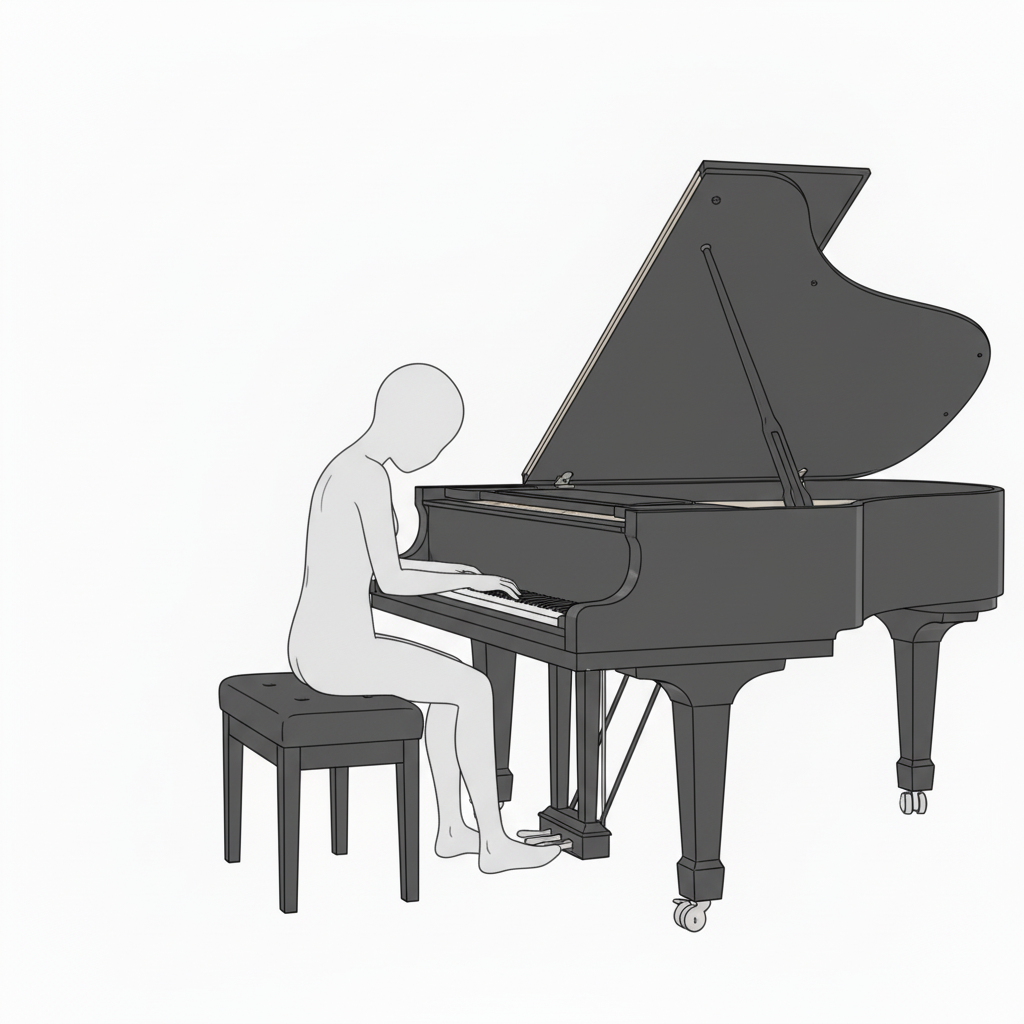
Piano instruction pose with a raised hand | For lesson or conducting scenes
A natural gesture as if teaching a student. Useful for educational or practice-scene illustration.
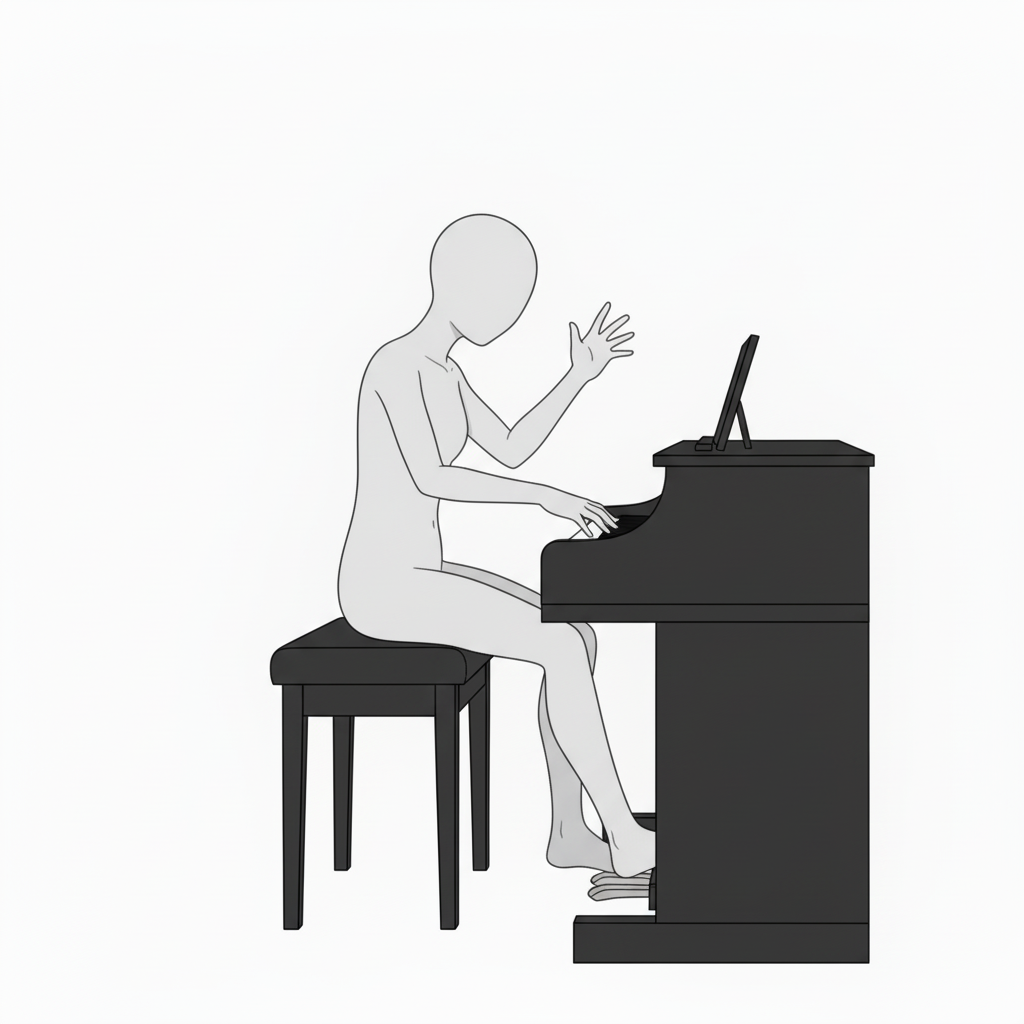
Instructor pose explaining at a digital piano | For depicting music classes
A natural gesture with one finger slightly raised. Ideal for explanation or lecture scenes.
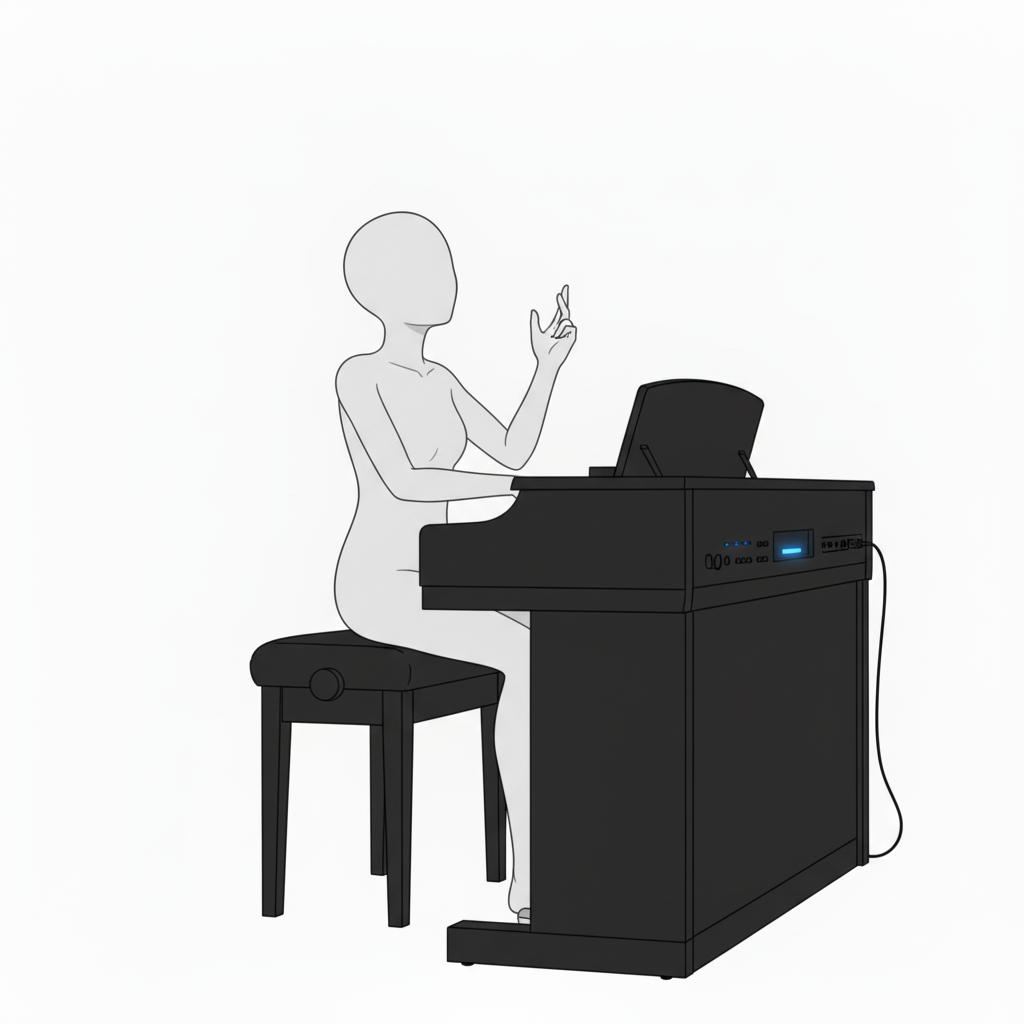
High-energy performance pose | Creating excitement in a live scene
A keyboard performance with one hand raised high. A striking composition for bright, upbeat music scenes.
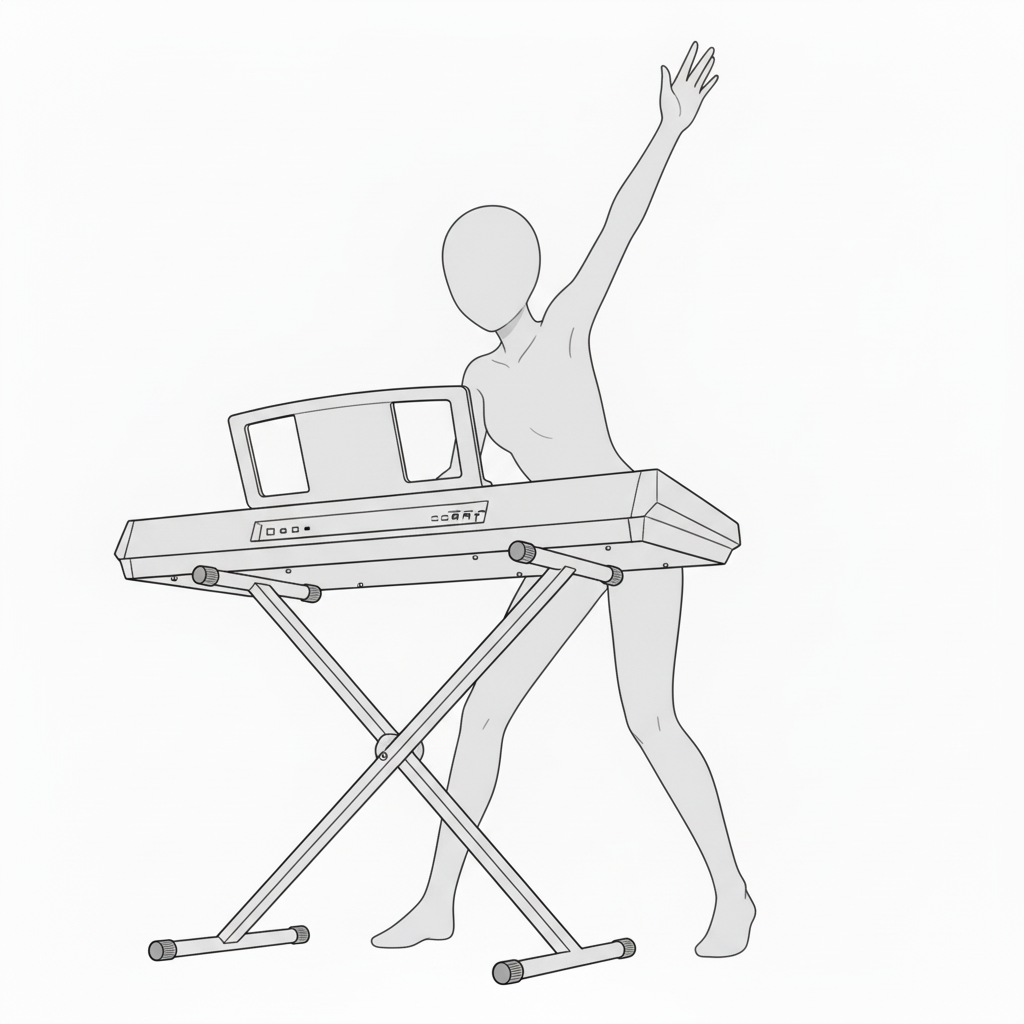
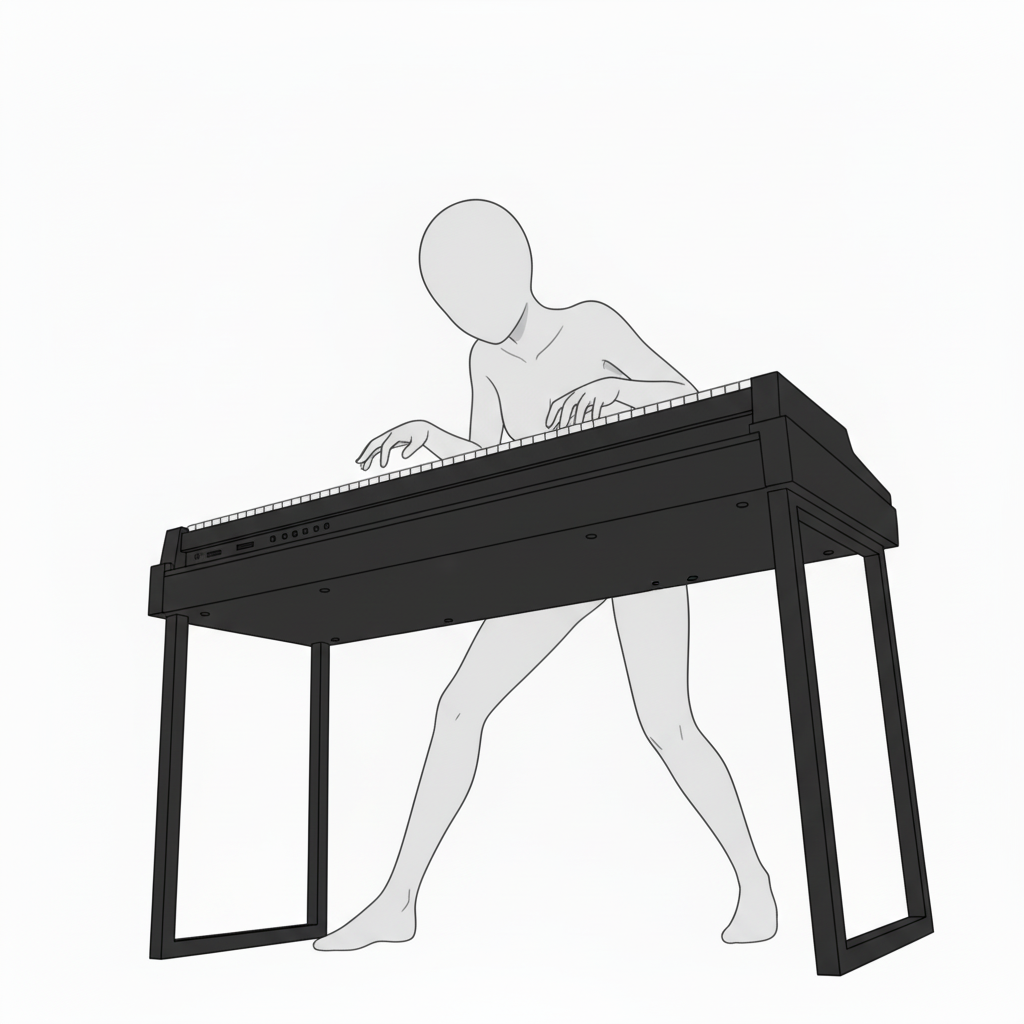
Performance composition from a low angle | For impactful stage expression
A forward-leaning motion striking the keys. An active pose that conveys the heat of a live show.
DJ-style performance with both hands raised | Ideal for hyped performance scenes
A live pose appealing to the audience. Can also be adapted for electronic music or festival staging.
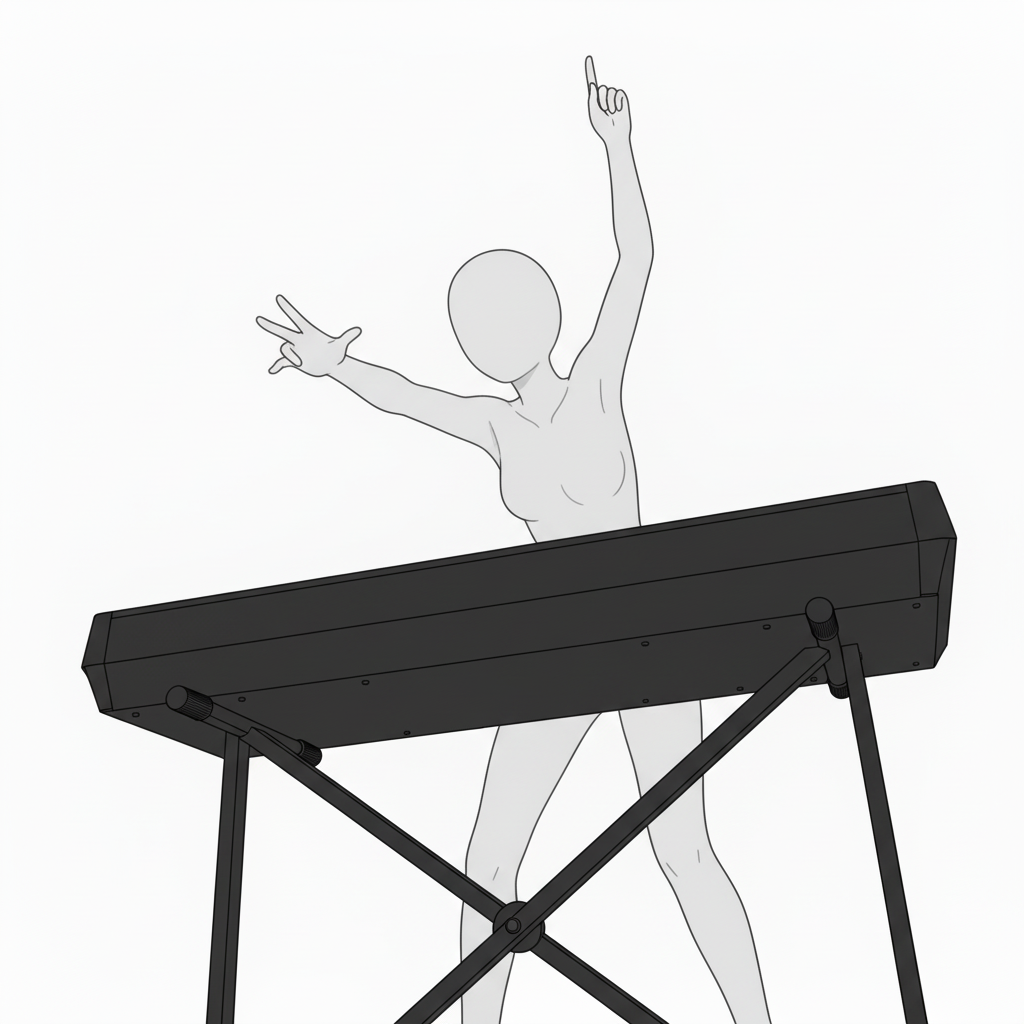
Back-arched performance pose | A movement expressing a climax
A dynamic posture arching the back and raising the arms. A pose strong for emotional expression.
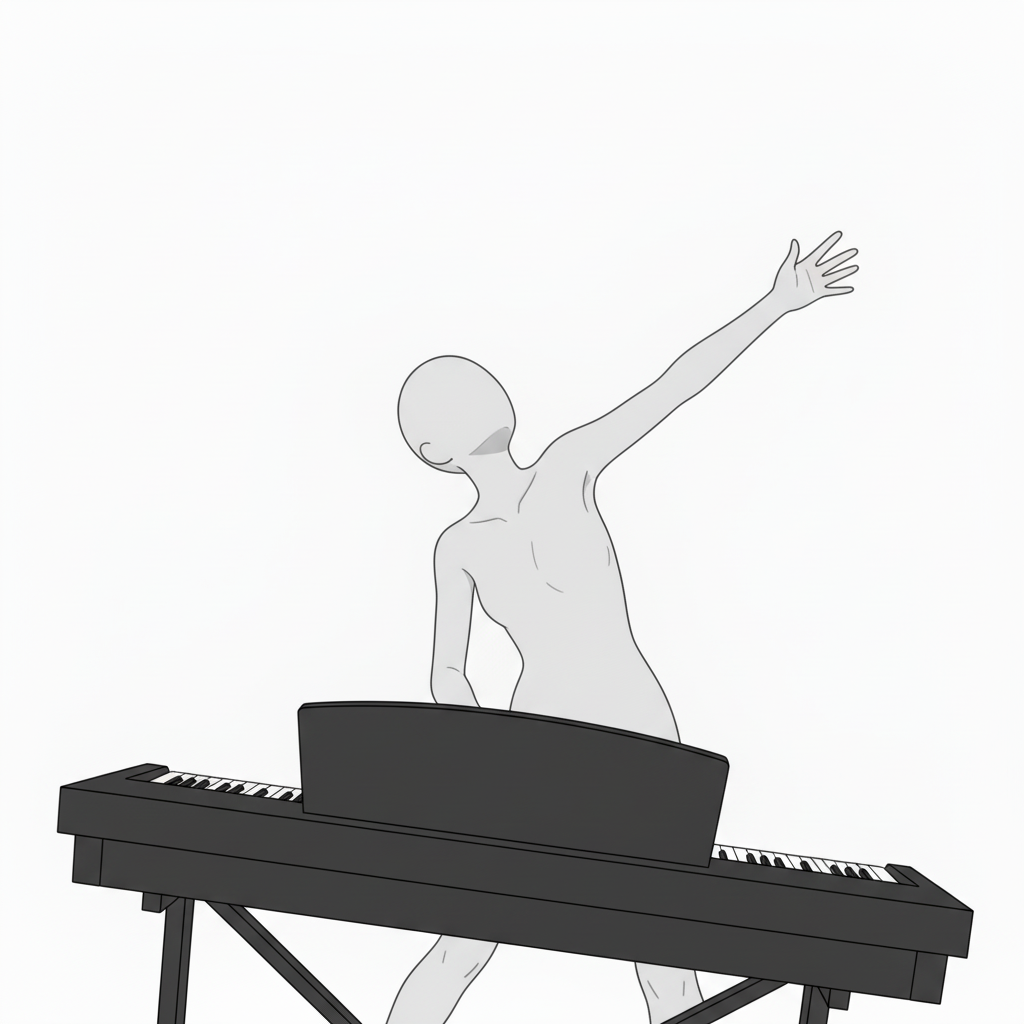
Live ending pose with arms spread | A composition that shines in the final scene
A finishing pose pointing with one hand and spreading the other. Creates a sense of unity with the audience.
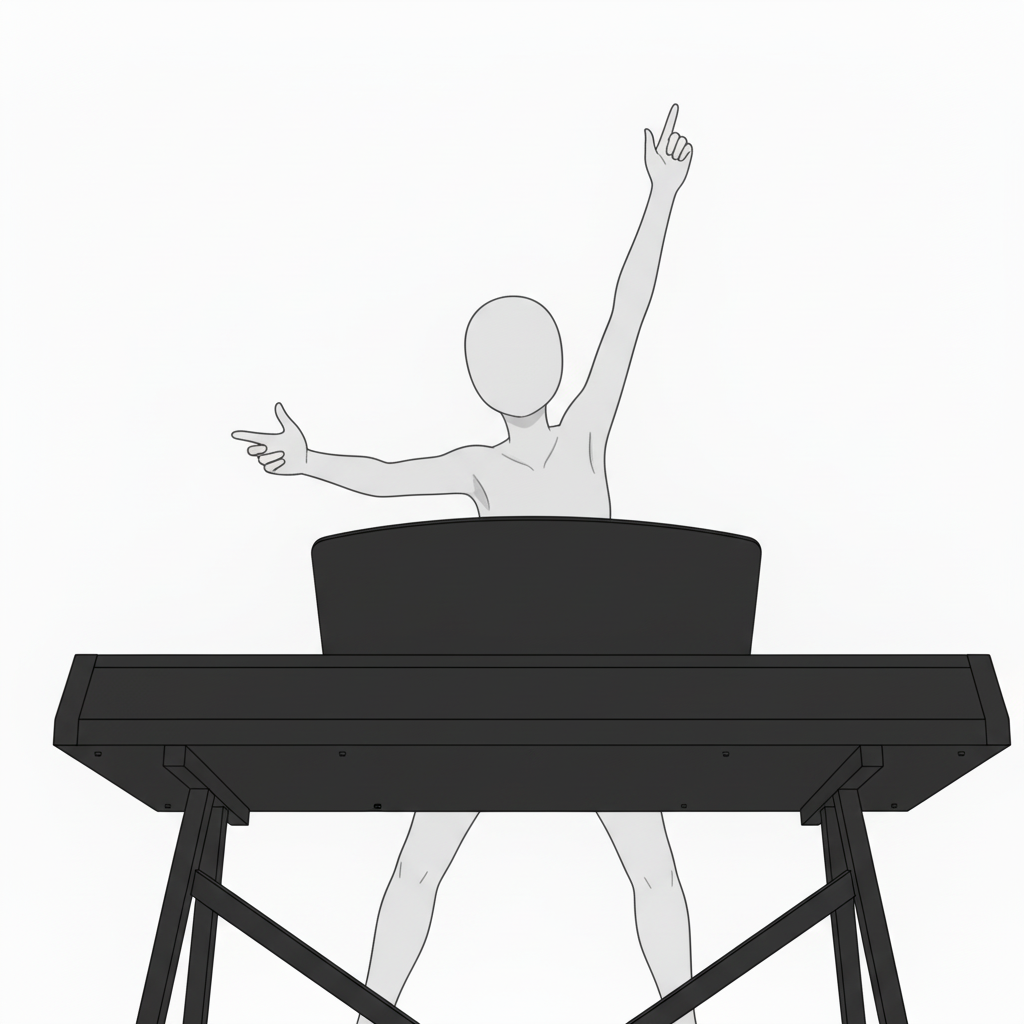
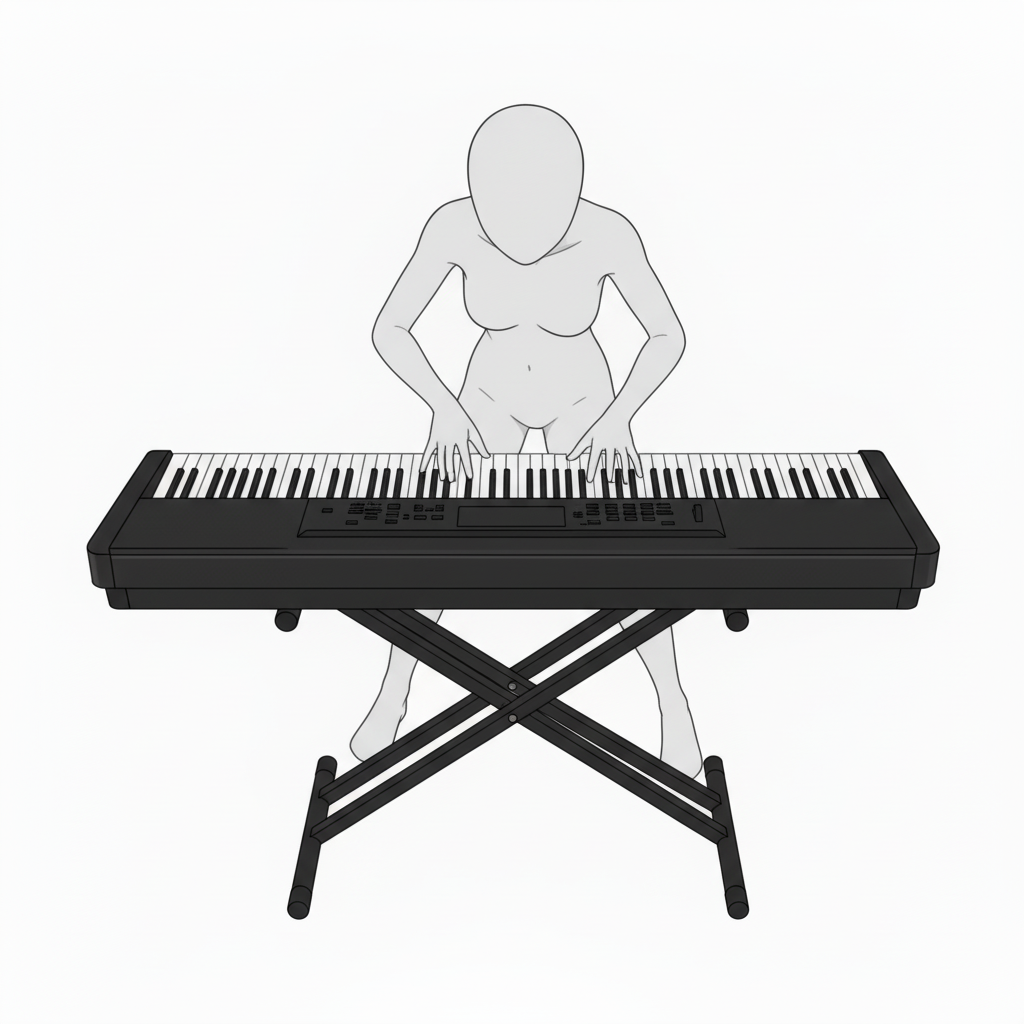
Front-view digital piano performance pose | A simple, easy-to-use reference composition
A straight-on composition where the keyboard and body alignment is clear. Ideal as foundational reference for playing form.
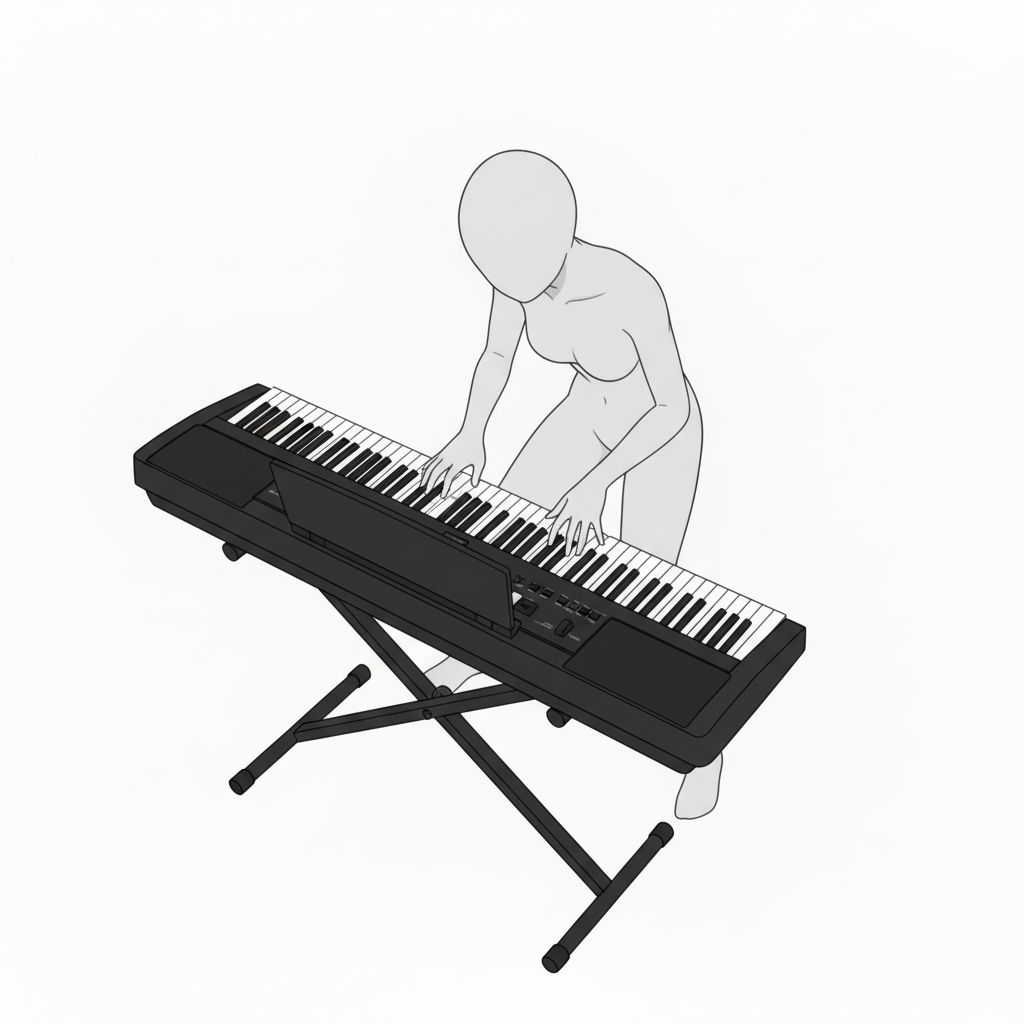
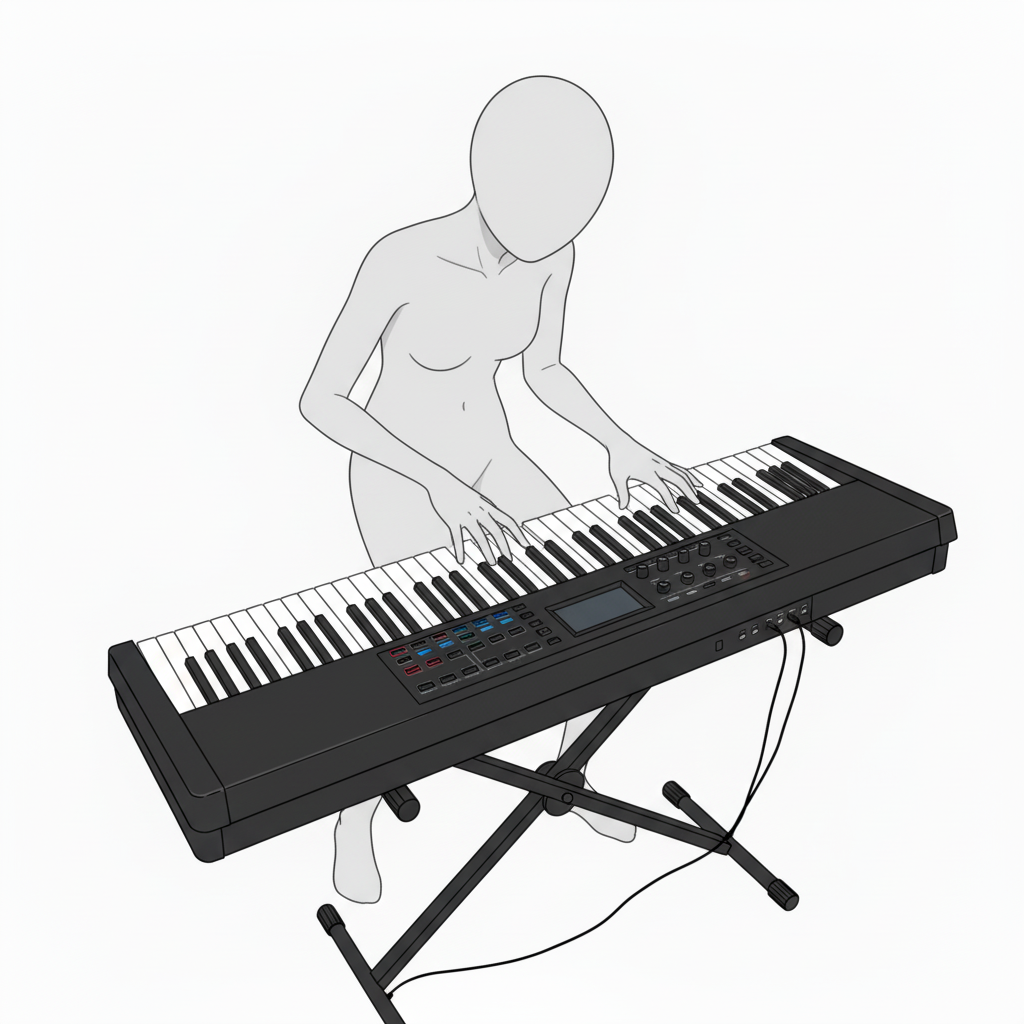
Diagonal top-down digital piano performance pose | A stage composition with depth
An angled overhead view that adds a sense of realism. Useful for live scenes or practice scenes.
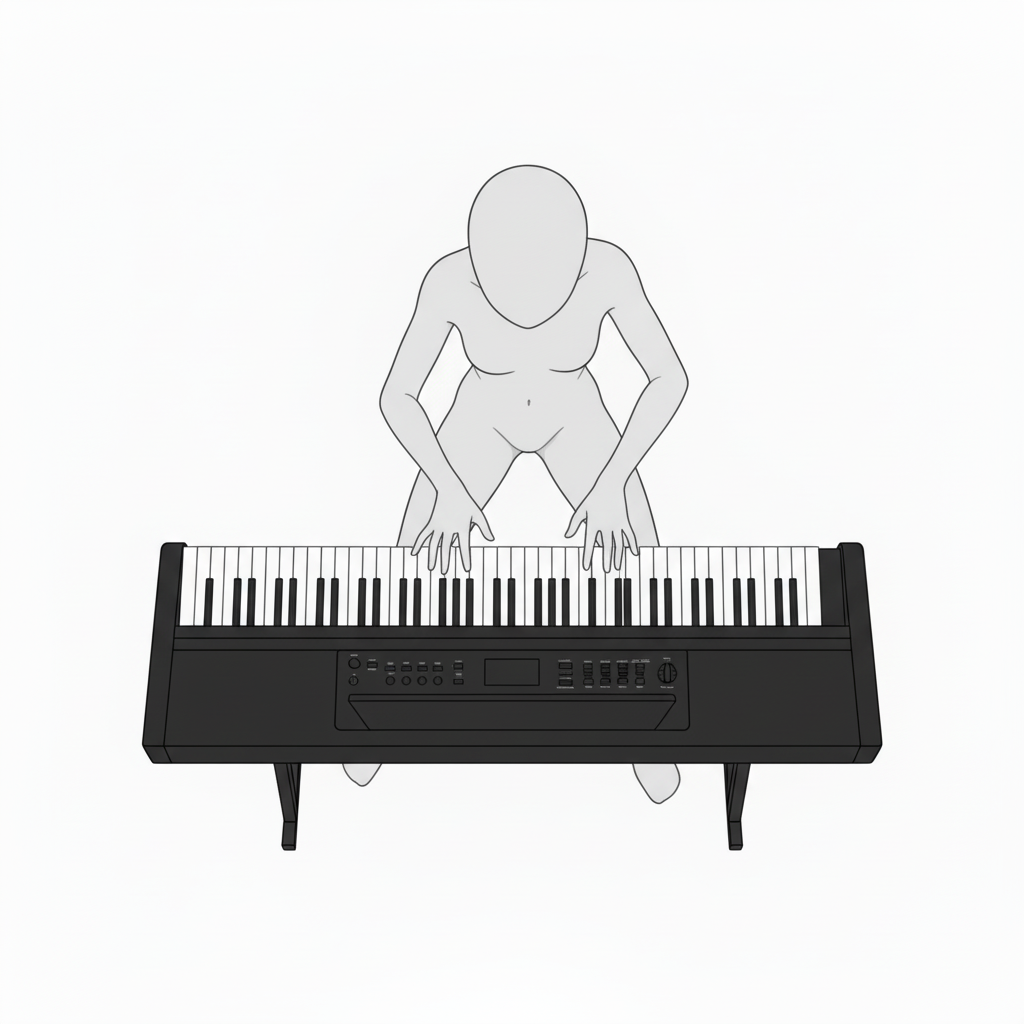
Top-down focused performance pose | Clearly showing left and right hand movement
A composition capturing the full keyboard and posture. Recommended for drawing practice or performance scenes.
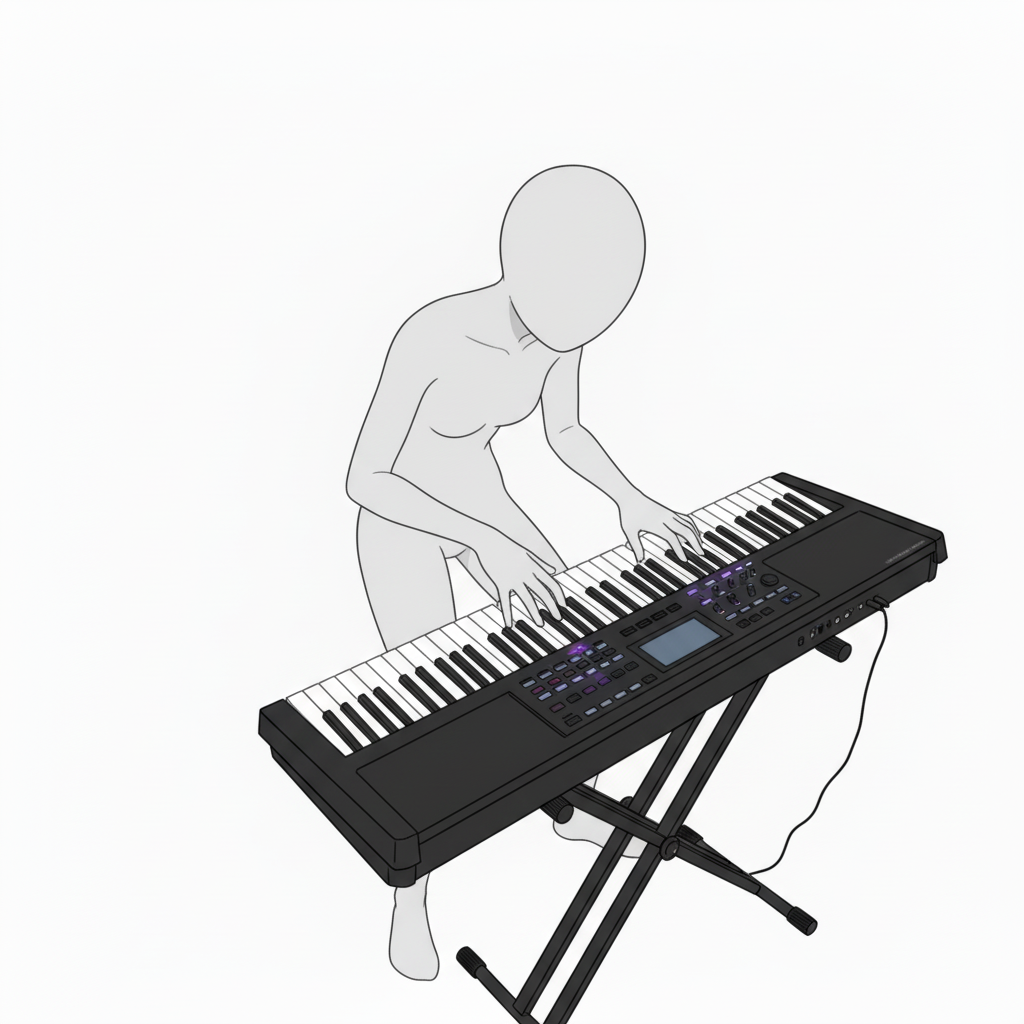
Live pose operating an electric piano | Ideal for stage performance
Features hand movement interacting with the control panel. Perfect for depicting live performance details.
Seated digital piano performance pose | For calm, relaxed performance scenes
A composition facing the keys in a relaxed posture. Ideal for home practice or gentle performance scenes.
■ Using These in copainter
Change poses with the AI Assistant
Load the images as reference and quickly generate pose variations such as angle changes, limb position adjustments, and horizontal flipping. Because it’s pose specification, you can also use these images even when specifying poses for male characters.
Ensure consistency with the training feature (Enterprise plan only)
By specifying poses for a trained model, you can achieve high-accuracy pose control. Even highly precise pose control that the AI assistant can’t express can work effectively with trained models. Using an image-to-image AI often yields better results.
Improve efficiency by using them as a base for line-art AI
Use these as rough layouts before applying a line-art AI to speed up production. While using this material as a base, you can retouch and edit in tools like Photoshop or Clip Studio Paint, then run the line-art AI—useful even for difficult compositions.
■ Terms of Use (License)
- Eligible users: copainter subscribers
- Usage scope: Commercial and free use allowed only within copainter
- Modification: Allowed (cropping / edits / color changes / vectorization, etc.)
- Credit: Not required
- Prohibited: Redistribution or sale of the asset data / claiming authorship / commercial use outside copainter
■ FAQ
Q. Can I use copainter for free?
A. Yes. There is a free plan where you can receive tickets with no monthly fee. If you want to increase usage, please use a higher-tier plan. Please see the plans here.
Q. Can I use these outside copainter?
A. If you are a copainter subscriber and use them within copainter, commercial and free use are allowed. However, using external services to retouch/edit for the purpose of using them in copainter is fine.
Q. Is it OK to use them in commercial works?
A. Yes, if you create the work using copainter. You don’t have to create the entire work with copainter. Note that redistribution or sale of the assets themselves is not allowed.
Q. Are there other free pose collections?
A. Yes. Please refer to the following:https://blog.copainter.ai/tag/assets-en/
Q. Are higher-resolution images available?
A. You can upscale images up to 4× in both width and height using the High-Resolution AI inside copainter. Please make use of it.
If you haven’t used copainter yet, this is a great opportunity—please sign up for copainter using the link below!
You can find copainter Learn, our media hub packed with tips and best practices for using copainter effectively, at the link below.
![[Free Download] Chibi Character Battle Pose Collection — Free for Copainter Users, Including Commercial Use](/content/images/size/w720/2026/03/header_pose-collection_battle-of-deformation-character-1.png)
![[Free Download] Female Battle Pose Collection — Free for Copainter Users, Including Commercial Use](/content/images/size/w720/2026/03/header_pose-collection_battle-of-woman-1.png)
![[Free Download] Male Battle Pose Collection — Free for Copainter Users, Including Commercial Use](/content/images/size/w720/2026/03/header_pose-collection_battle-of-man-1.png)